
Member of the Swedish Gallery Association
Major Acquisition — Ernst Billgren
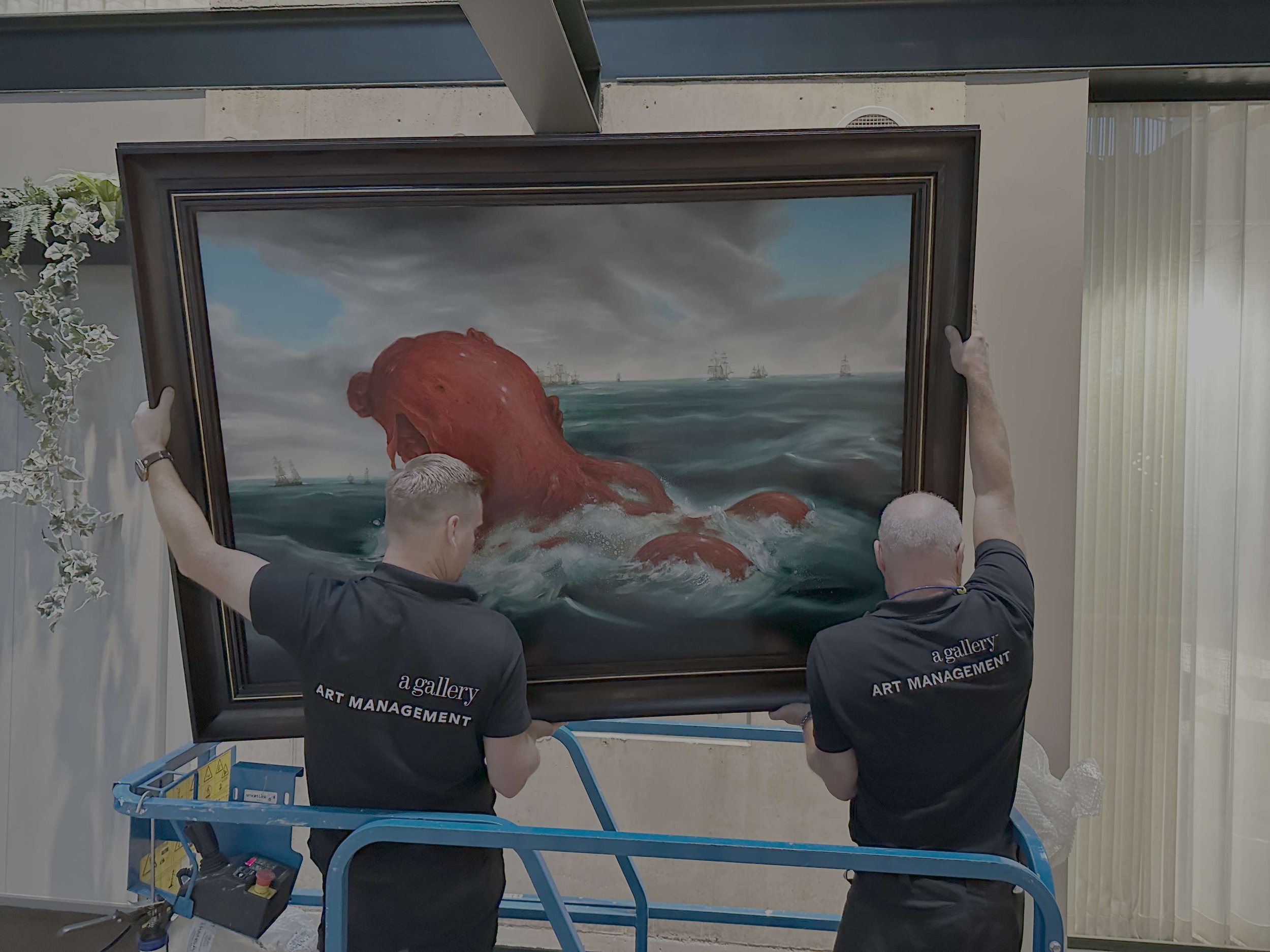
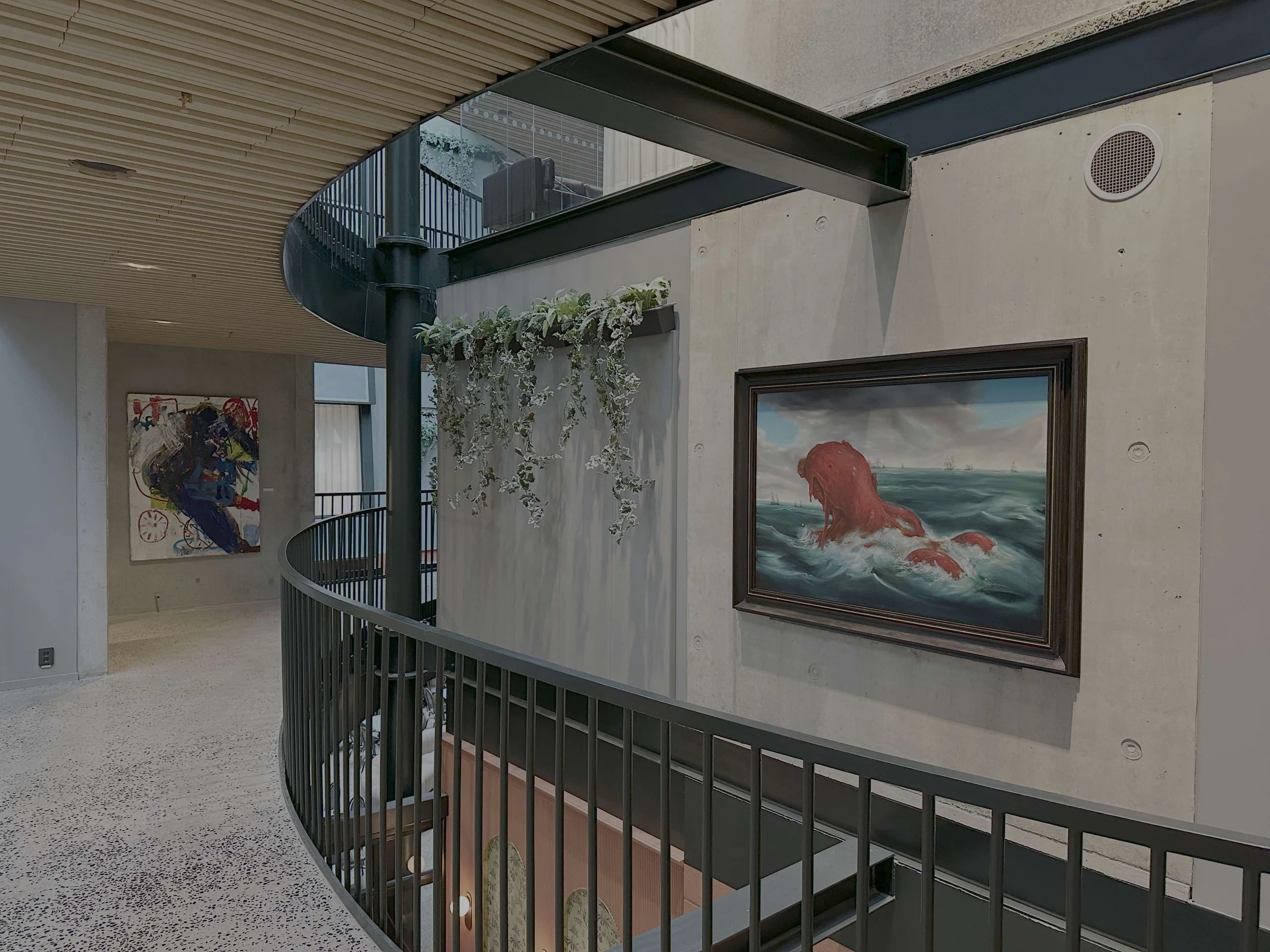
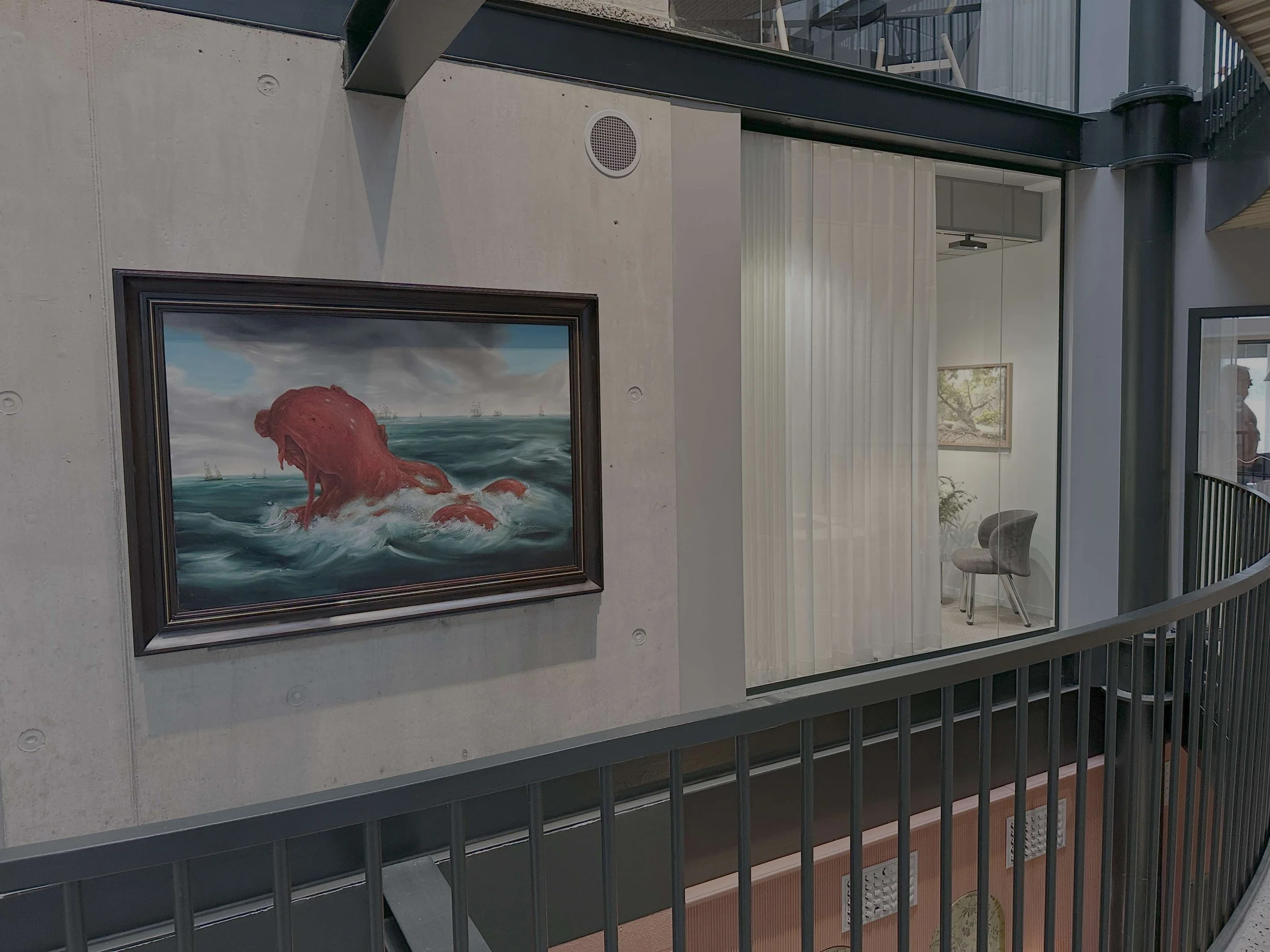
As part of the new headquarters collection, the bank has acquired a major oil painting by Ernst Billgren: Doggerkvinnan (del III) (2025), oil on panel, 140 × 190 cm .
The work was exhibited at Nationalmuseum in 2025 in connection with the publication of Billgren’s book Nya minnen. Its inclusion in that institutional context situates the painting within one of Sweden’s most central art historical narratives.
The Doggerkvinnan series refers to Doggerland — the now-submerged landmass that once connected Scandinavia and continental Europe. In Billgren’s interpretation, this lost geography becomes metaphor: memory beneath the surface, history reshaped by time, civilisation layered over absence. The female figure is not illustrative; she is archetypal. A presence emerging from sedimented narratives.
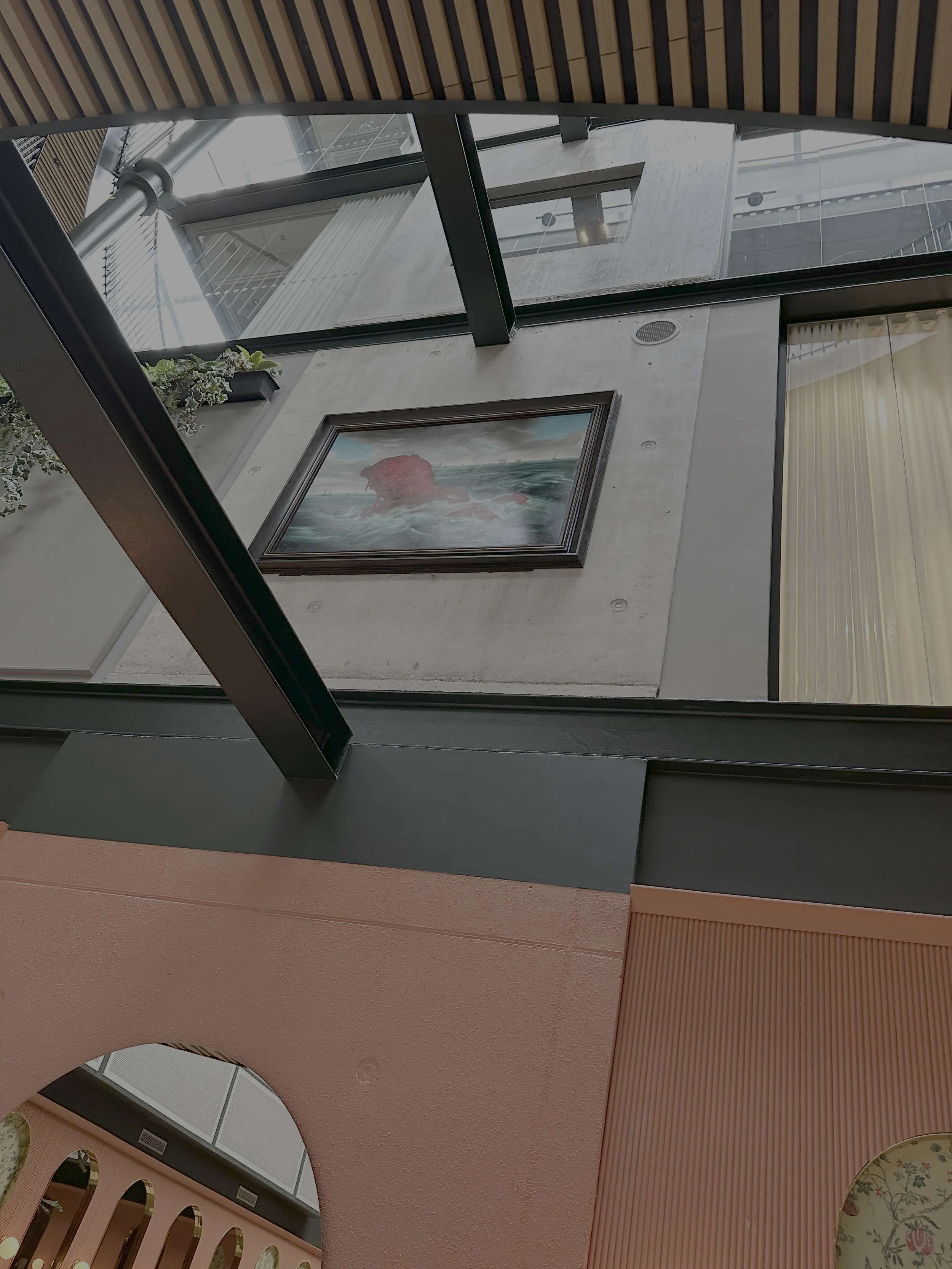
In the headquarters environment, the painting carries scale and authority. It introduces historical depth into a contemporary architectural setting. Billgren’s characteristic interplay between mythology, irony and painterly tradition creates a work that is both monumental and psychologically layered.
Complementing the painting, the bank has also acquired a glazed ceramic vase in Billgren’s unmistakable idiom — adorned with ducks, a recurring motif in his oeuvre. Where the large oil painting engages with submerged landscapes and collective memory, the ceramic piece introduces wit and continuity. The duck, in Billgren’s universe, oscillates between the ordinary and the emblematic — nature rendered with intellectual playfulness.
Installed within the social core of the headquarters — where employees meet daily and where client events are regularly hosted — these works operate on multiple levels. They signal cultural seriousness, long-term thinking and an engagement with artists of institutional stature.
For the collection as a whole, the inclusion of Ernst Billgren establishes gravitational weight. It anchors the contemporary acquisitions within a broader Swedish art historical continuum while maintaining relevance in a present-day context.
This is not decorative acquisition.
It is structural positioning.